If you are stopped by police on suspicion of OUI, one of the first things an officer may ask you to do is perform standard field sobriety tests. Many drivers assume these tests are mandatory or that refusing them will automatically result in penalties. In Massachusetts, this is not true.
Standard field sobriety tests are roadside exercises designed to help officers assess whether a driver may be impaired. The most commonly used standardized field sobriety tests include:
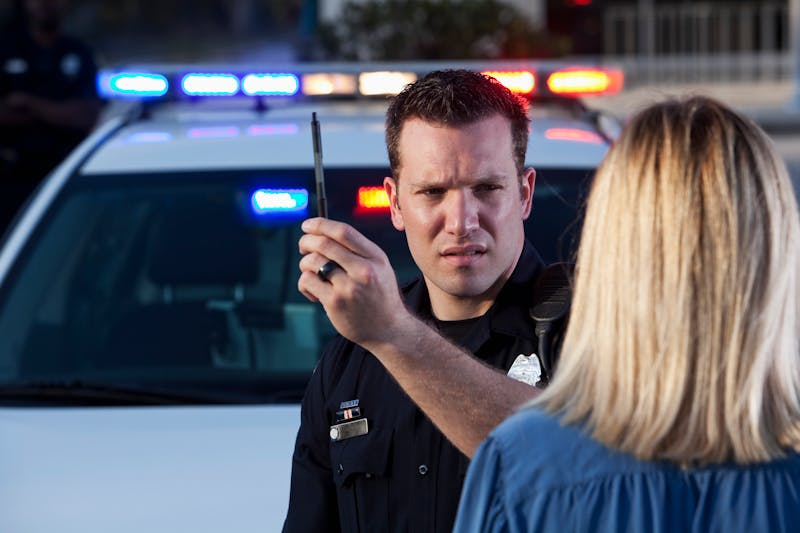
- Horizontal Gaze Nystagmus (HGN): the officer asks you to follow an object with your eyes to observe involuntary eye movements that may be associated with alcohol consumption.
- Walk-and-Turn Test: you are instructed to walk heel-to-toe in a straight line and walk back while following specific instructions.
- One-Leg Stand Test: you must stand on one leg while counting aloud for a set period.
Officers may also ask drivers to perform non-standardized tests, such as reciting the alphabet or counting backwards, even though these are not scientifically validated.
In Massachusetts, field sobriety tests are completely voluntary. You are under no legal obligation to perform them, and refusing does not result in license suspension, fines, or additional criminal charges.
Despite this, officers do not often explain that field sobriety tests are optional. Many drivers agree to perform them out of nervousness or misunderstanding, unaware that the tests are designed to generate evidence against them.
Field sobriety tests are not pass-fail exams. They are subjective assessments, scored entirely by the observing officer. Factors unrelated to alcohol or drugs can significantly affect performance, including:
- Fatigue or anxiety
- Medical conditions or injuries
- Uneven pavement or poor weather conditions
- Footwear or age-related balance issues
Even sober drivers frequently “fail” these tests. Once administered, the officer’s interpretation often becomes a central piece of evidence used to justify an arrest.
In court, prosecutors rely heavily on field sobriety tests to establish probable cause for arrest and to argue impairment at trial. Officers may testify about “clues” they observed during the tests, even though the tests themselves are not definitive proof of intoxication.
At Gilman Law, we are able to analyze whether the tests were administered correctly, the conditions were appropriate, medical or environmental factors affected performance, and whether the officer’s conclusions are supported by reliable evidence. Challenging field sobriety tests is often a key component of a strong OUI defense.
While every situation is different, it is important to know that politely declining field sobriety tests is a lawful choice. Refusal limits the amount of evidence available to the Commonwealth and preserves defenses that may later be raised in court. An officer may still arrest you based on other observations, but refusing field sobriety tests often places your attorney in a stronger position to challenge the legality and strength of the case.
At Gilman Law, we focus on aggressive, detail-oriented defense in motor vehicle and OUI cases. We understand how field sobriety tests are used–and misused–and we work to ensure your rights are protected at every stage of the process. If you are facing an OUI charge or have questions about your rights during a traffic stop, contact Gilman Law to discuss your case.